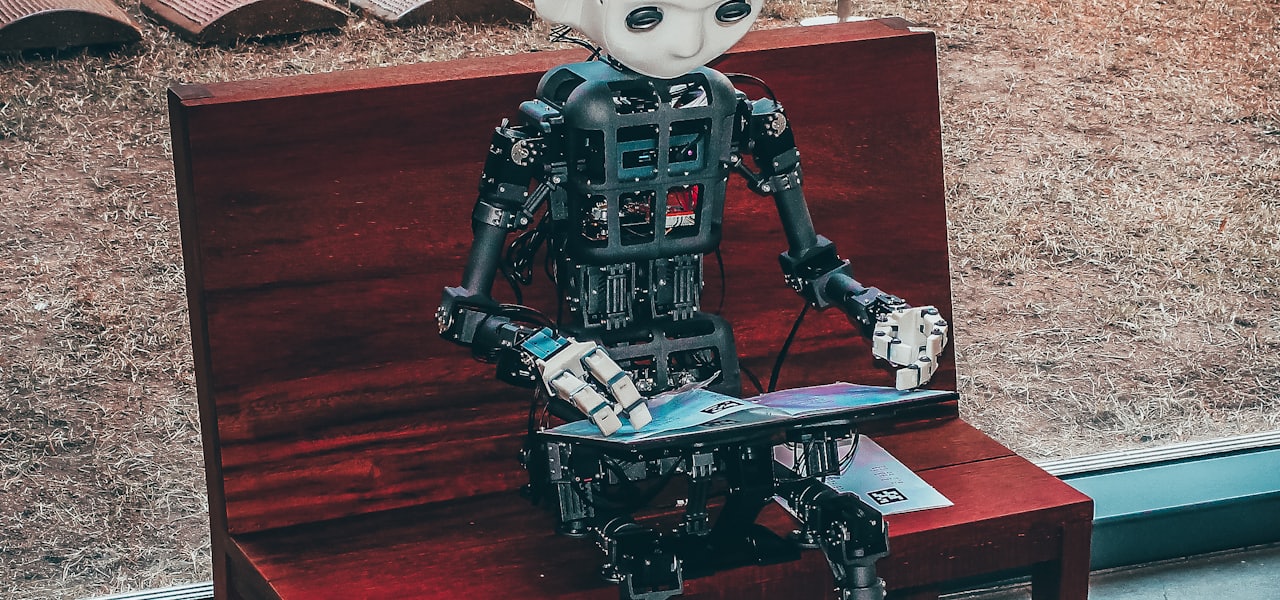
In search of the best AI sales assistant? An AI sales assistant is software that uses machine learning to help you get more done — it turns a rough idea into a polished result in seconds. When choosing one, weigh output quality, pricing, export formats, and how well it fits the tools you already use. Whether you are a beginner or a pro, the right AI sales assistant slots into your workflow and pays for itself fast. Below we compare features, pricing, and real output so you can choose with confidence.
Texture filtering
In computer graphics, texture filtering or texture smoothing is the method used to determine the texture color for a texture mapped pixel, using the colors of nearby texels (ie. pixels of the texture). Filtering describes how a texture is applied at many different shapes, size, angles and scales. Depending on the chosen filter algorithm, the result will show varying degrees of blurriness, detail, spatial aliasing, temporal aliasing and blocking. Depending on the circumstances, filtering can be performed in software (such as a software rendering package) or in hardware, eg. with either real time or GPU accelerated rendering circuits, or in a mixture of both. For most common interactive graphical applications, modern texture filtering is performed by dedicated hardware which optimizes memory access through memory cacheing and pre-fetch, and implements a selection of algorithms available to the user and developer. There are two main categories of texture filtering: magnification filtering and minification filtering. Depending on the situation, texture filtering is either a type of reconstruction filter where sparse data is interpolated to fill gaps (magnification), or a type of anti-aliasing (AA) where texture samples exist at a higher frequency than required for the sample frequency needed for texture fill (minification). There are many methods of texture filtering, which make different trade-offs between computational complexity, memory bandwidth and image quality. == The need for filtering == During the texture mapping process for any arbitrary 3D surface, a texture lookup takes place to find out where on the texture each pixel center falls. For texture-mapped polygonal surfaces composed of triangles typical of most surfaces in 3D games and movies, every pixel (or subordinate pixel sample) of that surface will be associated with some triangle(s) and a set of barycentric coordinates, which are used to provide a position within a texture. Such a position may not lie perfectly on the "pixel grid," necessitating some function to account for these cases. In other words, since the textured surface may be at an arbitrary distance and orientation relative to the viewer, one pixel does not usually correspond directly to one texel. Some form of filtering has to be applied to determine the best color for the pixel. Insufficient or incorrect filtering will show up in the image as artifacts (errors in the image), such as 'blockiness', jaggies, or shimmering. There can be different types of correspondence between a pixel and the texel/texels it represents on the screen. These depend on the position of the textured surface relative to the viewer, and different forms of filtering are needed in each case. Given a square texture mapped on to a square surface in the world, at some viewing distance the size of one screen pixel is exactly the same as one texel. Closer than that, the texels are larger than screen pixels, and need to be scaled up appropriately — a process known as texture magnification. Farther away, each texel is smaller than a pixel, and so one pixel covers multiple texels. In this case an appropriate color has to be picked based on the covered texels, via texture minification. Graphics APIs such as OpenGL allow the programmer to set different choices for minification and magnification filters. Note that even in the case where the pixels and texels are exactly the same size, one pixel will not necessarily match up exactly to one texel. It may be misaligned or rotated, and cover parts of up to four neighboring texels. Hence some form of filtering is still required. == Mipmapping == Mipmapping is a standard technique used to save some of the filtering work needed during texture minification. It is also highly beneficial for cache coherency - without it the memory access pattern during sampling from distant textures will exhibit extremely poor locality, adversely affecting performance even if no filtering is performed. During texture magnification, the number of texels that need to be looked up for any pixel is always four or fewer; during minification, however, as the textured polygon moves farther away potentially the entire texture might fall into a single pixel. This would necessitate reading all of its texels and combining their values to correctly determine the pixel color, a prohibitively expensive operation. Mipmapping avoids this by prefiltering the texture and storing it in smaller sizes down to a single pixel. As the textured surface moves farther away, the texture being applied switches to the prefiltered smaller size. Different sizes of the mipmap are referred to as 'levels', with Level 0 being the largest size (used closest to the viewer), and increasing levels used at increasing distances. == Filtering methods == This section lists the most common texture filtering methods, in increasing order of computational cost and image quality. === Nearest-neighbor interpolation === Nearest-neighbor interpolation is the simplest and crudest filtering method — it simply uses the color of the texel closest to the pixel center for the pixel color. While simple, this results in a large number of artifacts - texture 'blockiness' during magnification, and aliasing and shimmering during minification. This method is fast during magnification but during minification the stride through memory becomes arbitrarily large and it can often be less efficient than MIP-mapping due to the lack of spatially coherent texture access and cache-line reuse. === Nearest-neighbor with mipmapping === This method still uses nearest neighbor interpolation, but adds mipmapping — first the nearest mipmap level is chosen according to distance, then the nearest texel center is sampled to get the pixel color. This reduces the aliasing and shimmering significantly during minification but does not eliminate it entirely. In doing so it improves texture memory access and cache-line reuse through avoiding arbitrarily large access strides through texture memory during rasterization. This does not help with blockiness during magnification as each magnified texel will still appear as a large rectangle. === Linear mipmap filtering === Less commonly used, OpenGL and other APIs support nearest-neighbor sampling from individual mipmaps whilst linearly interpolating the two nearest mipmaps relevant to the sample. === Bilinear filtering === In Bilinear filtering, the four nearest texels to the pixel center are sampled (at the closest mipmap level), and their colors are combined by weighted average according to distance. This removes the 'blockiness' seen during magnification, as there is now a smooth gradient of color change from one texel to the next, instead of an abrupt jump as the pixel center crosses the texel boundary. Bilinear filtering for magnification filtering is common. When used for minification it is often used with mipmapping; though it can be used without, it would suffer the same aliasing and shimmering problems as nearest-neighbor filtering when minified too much. For modest minification ratios, however, it can be used as an inexpensive hardware accelerated weighted texture supersample. The Nintendo 64 used an unusual version of bilinear filtering where only three pixels are used known as 3-point texture filtering, instead of four due to hardware optimization concerns. This introduces a noticeable "triangulation bias" in some textures. === Trilinear filtering === Trilinear filtering is a remedy to a common artifact seen in mipmapped bilinearly filtered images: an abrupt and very noticeable change in quality at boundaries where the renderer switches from one mipmap level to the next. Trilinear filtering solves this by doing a texture lookup and bilinear filtering on the two closest mipmap levels (one higher and one lower quality), and then linearly interpolating the results. This results in a smooth degradation of texture quality as distance from the viewer increases, rather than a series of sudden drops. Of course, closer than Level 0 there is only one mipmap level available, and the algorithm reverts to bilinear filtering. === Anisotropic filtering === Anisotropic filtering is the highest quality filtering available in current consumer 3D graphics cards. Simpler, "isotropic" techniques use only square mipmaps which are then interpolated using bi– or trilinear filtering. (Isotropic means same in all directions, and hence is used to describe a system in which all the maps are squares rather than rectangles or other quadrilaterals.) When a surface is at a high angle relative to the camera, the fill area for a texture will not be approximately square. Consider the common case of a floor in a game: the fill area is far wider than it is tall. In this case, none of the square maps are a good fit. The result is blurriness and/or shimmering, depending on how the fit is chosen. Anisotropic filtering corrects this by sampling the texture as a non-square shape. The goal is
Is an AI Subtitle Generator Worth It in 2026?
Comparing the best AI subtitle generator? An AI subtitle generator is software that uses machine learning to help you get more done — it lowers the barrier so anyone can produce professional output. Privacy matters too: check whether your data trains the model and whether a no-log or enterprise tier is available. Whether you are a beginner or a pro, the right AI subtitle generator slots into your workflow and pays for itself fast. We tested the leading options and ranked them by quality, value, and ease of use.
Machine translation of sign languages
The machine translation of sign languages has been possible, albeit in a limited fashion, since 1977. When a research project successfully matched English letters from a keyboard to ASL manual alphabet letters which were simulated on a robotic hand. These technologies translate signed languages into written or spoken language, and written or spoken language to sign language, without the use of a human interpreter. Sign languages possess different phonological features than spoken languages, which has created obstacles for developers. Developers use computer vision and machine learning to recognize specific phonological parameters and epentheses unique to sign languages, and speech recognition and natural language processing allow interactive communication between hearing and deaf people. == Limitations == Sign language translation technologies are limited in the same way as spoken language translation. None can translate with 100% accuracy. In fact, sign language translation technologies are far behind their spoken language counterparts. This is, in no trivial way, due to the fact that signed languages have multiple articulators. Where spoken languages are articulated through the vocal tract, signed languages are articulated through the hands, arms, head, shoulders, torso, and parts of the face. This multi-channel articulation makes translating sign languages very difficult. An additional challenge for sign language MT is the fact that there is no formal written format for signed languages. There are notations systems but no writing system has been adopted widely enough, by the international Deaf community, that it could be considered the 'written form' of a given sign language. Sign Languages then are recorded in various video formats. There is no gold standard parallel corpus that is large enough for SMT, for example. == History == The history of automatic sign language translation started with the development of hardware such as finger-spelling robotic hands. In 1977, a finger-spelling hand project called RALPH (short for "Robotic Alphabet") created a robotic hand that can translate alphabets into finger-spellings. Later, the use of gloves with motion sensors became the mainstream, and some projects such as the CyberGlove and VPL Data Glove were born. The wearable hardware made it possible to capture the signers' hand shapes and movements with the help of the computer software. However, with the development of computer vision, wearable devices were replaced by cameras due to their efficiency and fewer physical restrictions on signers. To process the data collected through the devices, researchers implemented neural networks such as the Stuttgart Neural Network Simulator for pattern recognition in projects such as the CyberGlove. Researchers also use many other approaches for sign recognition. For example, Hidden Markov Models are used to analyze data statistically, and GRASP and other machine learning programs use training sets to improve the accuracy of sign recognition. Fusion of non-wearable technologies such as cameras and Leap Motion controllers have shown to increase the ability of automatic sign language recognition and translation software. == Technologies == === VISICAST === http://www.visicast.cmp.uea.ac.uk/Visicast_index.html === eSIGN project === http://www.visicast.cmp.uea.ac.uk/eSIGN/index.html === The American Sign Language Avatar Project at DePaul University === http://asl.cs.depaul.edu/ === Spanish to LSE === López-Ludeña, Verónica; San-Segundo, Rubén; González, Carlos; López, Juan Carlos; Pardo, José M. (2012), Methodology for developing a Speech into Sign Language Translation System in a New Semantic Domain (PDF), CiteSeerX 10.1.1.1065.5265, S2CID 2724186 === SignAloud === SignAloud is a technology that incorporates a pair of gloves made by a group of students at University of Washington that transliterate American Sign Language (ASL) into English. In February 2015 Thomas Pryor, a hearing student from the University of Washington, created the first prototype for this device at Hack Arizona, a hackathon at the University of Arizona. Pryor continued to develop the invention and in October 2015, Pryor brought Navid Azodi onto the SignAloud project for marketing and help with public relations. Azodi has a rich background and involvement in business administration, while Pryor has a wealth of experience in engineering. In May 2016, the duo told NPR that they are working more closely with people who use ASL so that they can better understand their audience and tailor their product to the needs of these people rather than the assumed needs. However, no further versions have been released since then. The invention was one of seven to win the Lemelson-MIT Student Prize, which seeks to award and applaud young inventors. Their invention fell under the "Use it!" category of the award which includes technological advances to existing products. They were awarded $10,000. The gloves have sensors that track the users hand movements and then send the data to a computer system via Bluetooth. The computer system analyzes the data and matches it to English words, which are then spoken aloud by a digital voice. The gloves do not have capability for written English input to glove movement output or the ability to hear language and then sign it to a deaf person, which means they do not provide reciprocal communication. The device also does not incorporate facial expressions and other nonmanual markers of sign languages, which may alter the actual interpretation from ASL. === ProDeaf === ProDeaf (WebLibras) is a computer software that can translate both text and voice into Portuguese Libras (Portuguese Sign Language) "with the goal of improving communication between the deaf and hearing." There is currently a beta edition in production for American Sign Language as well. The original team began the project in 2010 with a combination of experts including linguists, designers, programmers, and translators, both hearing and deaf. The team originated at Federal University of Pernambuco (UFPE) from a group of students involved in a computer science project. The group had a deaf team member who had difficulty communicating with the rest of the group. In order to complete the project and help the teammate communicate, the group created Proativa Soluções and have been moving forward ever since. The current beta version in American Sign Language is very limited. For example, there is a dictionary section and the only word under the letter 'j' is 'jump'. If the device has not been programmed with the word, then the digital avatar must fingerspell the word. The last update of the app was in June 2016, but ProDeaf has been featured in over 400 stories across the country's most popular media outlets. The application cannot read sign language and turn it into word or text, so it only serves as a one-way communication. Additionally, the user cannot sign to the app and receive an English translation in any form, as English is still in the beta edition. === Kinect Sign Language Translator === Since 2012, researchers from the Chinese Academy of Sciences and specialists of deaf education from Beijing Union University in China have been collaborating with Microsoft Research Asian team to create Kinect Sign Language Translator. The translator consists of two modes: translator mode and communication mode. The translator mode is capable of translating single words from sign into written words and vice versa. The communication mode can translate full sentences and the conversation can be automatically translated with the use of the 3D avatar. The translator mode can also detect the postures and hand shapes of a signer as well as the movement trajectory using the technologies of machine learning, pattern recognition, and computer vision. The device also allows for reciprocal communication because the speech recognition technology allows the spoken language to be translated into the sign language and the 3D modeling avatar can sign back to the deaf people. The original project was started in China based on translating Chinese Sign Language. In 2013, the project was presented at Microsoft Research Faculty Summit and Microsoft company meeting. Currently, this project is also being worked by researchers in the United States to implement American Sign Language translation. As of now, the device is still a prototype, and the accuracy of translation in the communication mode is still not perfect. === SignAll === SignAll is an automatic sign language translation system provided by Dolphio Technologies in Hungary. The team is "pioneering the first automated sign language translation solution, based on computer vision and natural language processing (NLP), to enable everyday communication between individuals with hearing who use spoken English and deaf or hard of hearing individuals who use ASL." The system of SignAll uses Kinect from Microsoft and other web camera
Jaime Carbonell
Jaime Guillermo Carbonell (July 29, 1953 – February 28, 2020) was a computer scientist who made seminal contributions to the development of natural language processing tools and technologies. His research in machine translation resulted in the development of several state-of-the-art language translation and artificial intelligence systems. He earned his B.S. degrees in Physics and in Mathematics from MIT in 1975 and did his Ph.D. under Dr. Roger Schank at Yale University in 1979. He joined Carnegie Mellon University as an assistant professor of computer science in 1979 and moved to Pittsburgh. He was affiliated with the Language Technologies Institute, Computer Science Department, Machine Learning Department, and Computational Biology Department at Carnegie Mellon. His interests spanned several areas of artificial intelligence, language technologies and machine learning. In particular, his research focused on areas such as text mining (extraction, categorization, novelty detection) and in new theoretical frameworks such as a unified utility-based theory bridging information retrieval, summarization, free-text question-answering and related tasks. He also worked on machine translation, both high-accuracy knowledge-based MT and machine learning for corpus-based MT (such as generalized example-based MT). == Career == Carbonell was the Allen Newell Professor of Computer Science and head of the Language Technologies Institute at Carnegie Mellon University. He joined Carnegie Mellon in 1979, and became a key faculty member in the artificial intelligence area. He was appointed full professor in 1987, Newell Chair in 1995, and University Professor in 2012. He completed his undergraduate studies at MIT. He received dual degrees in Mathematics and Physics. He received his Ph.D. in computer science from Yale University in 1979. At the time of his appointment, Carbonell was the youngest chaired professor in the School of Computer Science at CMU. His research spanned several areas of computer science, mostly in artificial intelligence, including: machine learning, data and text mining, natural language processing, very-large-scale knowledge bases, translingual information retrieval and automated summarization. He wrote more than 300 technical papers and gave over 500 invited or refereed-paper presentations (colloquia, seminars, panels, conferences, keynotes, etc.). He died following a long illness on February 28, 2020. Mona Talat Diab became the director of CMU's Language Technologies Institute in 2023. == Research == Carbonell created MMR (maximal marginal relevance) technology for text summarization and informational novelty detection in search engines, invention of transformational analogy, a generalized method for case-based reasoning (CBR) to re-use, modify and compose past successful plans for increasingly complex problems and knowledge-based interlingual machine translation. He was instrumental in setting up the Computational Biolinguistics Program, a joint venture between Carnegie Mellon and the University of Pittsburgh, which combines Language Technologies and Machine Learning to model and predict genomic, proteomic and glycomic 3D structures. Carbonell also did work in machine learning. He organized the first four machine learning conferences, starting with CMU in 1981. The Language Technologies Institute (LTI), founded and directed by Carbonell, achieved top honors in multiple areas. These areas include machine translation, search engines (including founding of Lycos by Michael Mauldin, one of Carbonell’s PhD students), speech synthesis, and education. LTI remains the original, largest and best-known institute for language technologies, with over $12M in annual funding and 200 researchers (faculty, staff, PhD students, MS students, visiting scholars etc.). Carbonell made major technical contributions in several fields, including (1) Creation of MMR (maximal marginal relevance) technology for text summarization and informational novelty detection in search engines,(2) Proactive machine learning for multi-source cost-sensitive active learning, (3) Linked conditional random fields for predicting tertiary and quaternary protein folds, (4) Symmetric optimal phrasal alignment method for trainable example-based and statistical machine translation, (5) Series- anomaly modeling for financial fraud detection and syndromic surveillance, (6) Knowledge-based interlingual machine translation, (7) Robust case-frame parsing, (8) Seeded version-space learning and (9) Invention of transformational and derivational analogy, generalized methods for case-based reasoning (CBR) to re-use, modify and compose past successful plans for increasingly complex problems. The teams led by Carbonell achieved top honors in many areas such as first scalable high-accuracy interlingual machine translation (1991), first speech-to-speech machine translation (1992), first large-scale spider and search engine (1994), and first trainable, large-scale protein-structure topology predictor (2005). Modern machine learning, co-founded by Carbonell, Michalski and Mitchell, is a fundamental enabling technology in search engines, data mining and social networking. Starting in 1980, he co-edited the first three books on ML, launched the ML conferences and was a co-founder and editor-in-chief of ML Journal. Carbonell’s innovations have led to several successful start-ups: Carnegie Group (AI expertsystems), Lycos (web search), Wisdom (financial optimization & ML), Carnegie Speech (spoken-language tutoring), Dynamix (data mining and pattern discovery), and Meaningful Machines (context-based machine translation). Carbonell was the founding director of The Language Technology Institute, the preeminent global institution in language studies, unparalleled in size and scope and has since been adopted/imitated in Germany (DFKI), Japan (Tokyo Univ.), and the US (Johns Hopkins). == Awards and honors == Okawa Prize, 2015 Best paper award, “Translingual Search” w/Yang, International Joint Conference on AI, 1997 Allen Newell endowed chair, Carnegie Mellon University, 1995 Elected fellow of AAAI, 1991 Computer Science teaching award, Carnegie Mellon University, 1987 Sperry Fellowship for excellence in AI research, 1986 Herbert Simon teaching award, 1986 "Recognition of Service" award from the ACM for the SIGART presidency, 1983–1985 Provided congressional testimony on machine translation, 1990 == Selected works == === Books === 1983. (with Ryszard S. Michalski & Tom M. Mitchell, Eds.) Machine learning: An artificial intelligence approach. Los Altos, CA: Morgan Kaufmann. 1986. (with Ryszard S. Michalski & Tom Mitchell, Eds.) Machine learning: An artificial intelligence approach. Vol. II. Los Altos, CA: Morgan-Kaufmann. 1986. (with Ryszard S. Michalski & Tom Mitchell, Eds.) Machine Learning: A Guide to Current Research. Kluwer Academic Publishers. == Contributions == “Protein Quaternary Fold Recognition Using Conditional Graphical Models” IJCAI 2007 (w/Liu et al.) “Context-Based Machine Translation” AMTA 2006 (w/Klein et al.) “SCRFs: A New Approach for Protein Fold Recognition,’’ Journal of Computational Biology, 13,2, 2006 (w/Liu et al) “MT for Resource-Poor Languages Using Elicitation-Based Learning” Machine Translation, 2004 ‘‘Learning Approaches for Detecting and Tracking News Events,’’ IEEE Trans I.S., 14, 4, 2000 (w/Yang)
Explanation-based learning
Explanation-based learning (EBL) is a form of machine learning that exploits a very strong, or even perfect, domain theory (i.e. a formal theory of an application domain akin to a domain model in ontology engineering, not to be confused with Scott's domain theory) in order to make generalizations or form concepts from training examples. It is also linked with Encoding (memory) to help with Learning. == Details == An example of EBL using a perfect domain theory is a program that learns to play chess through example. A specific chess position that contains an important feature such as "Forced loss of black queen in two moves" includes many irrelevant features, such as the specific scattering of pawns on the board. EBL can take a single training example and determine what are the relevant features in order to form a generalization. A domain theory is perfect or complete if it contains, in principle, all information needed to decide any question about the domain. For example, the domain theory for chess is simply the rules of chess. Knowing the rules, in principle, it is possible to deduce the best move in any situation. However, actually making such a deduction is impossible in practice due to combinatoric explosion. EBL uses training examples to make searching for deductive consequences of a domain theory efficient in practice. In essence, an EBL system works by finding a way to deduce each training example from the system's existing database of domain theory. Having a short proof of the training example extends the domain-theory database, enabling the EBL system to find and classify future examples that are similar to the training example very quickly. The main drawback of the method—the cost of applying the learned proof macros, as these become numerous—was analyzed by Minton. === Basic formulation === EBL software takes four inputs: a hypothesis space (the set of all possible conclusions) a domain theory (axioms about a domain of interest) training examples (specific facts that rule out some possible hypothesis) operationality criteria (criteria for determining which features in the domain are efficiently recognizable, e.g. which features are directly detectable using sensors) == Application == An especially good application domain for an EBL is natural language processing (NLP). Here a rich domain theory, i.e., a natural language grammar—although neither perfect nor complete, is tuned to a particular application or particular language usage, using a treebank (training examples). Rayner pioneered this work. The first successful industrial application was to a commercial NL interface to relational databases. The method has been successfully applied to several large-scale natural language parsing systems, where the utility problem was solved by omitting the original grammar (domain theory) and using specialized LR-parsing techniques, resulting in huge speed-ups, at a cost in coverage, but with a gain in disambiguation. EBL-like techniques have also been applied to surface generation, the converse of parsing. When applying EBL to NLP, the operationality criteria can be hand-crafted, or can be inferred from the treebank using either the entropy of its or-nodes or a target coverage/disambiguation trade-off (= recall/precision trade-off = f-score). EBL can also be used to compile grammar-based language models for speech recognition, from general unification grammars. Note how the utility problem, first exposed by Minton, was solved by discarding the original grammar/domain theory, and that the quoted articles tend to contain the phrase grammar specialization—quite the opposite of the original term explanation-based generalization. Perhaps the best name for this technique would be data-driven search space reduction. Other people who worked on EBL for NLP include Guenther Neumann, Aravind Joshi, Srinivas Bangalore, and Khalil Sima'an.
Top 10 AI Clip Makers Compared (2026)
Comparing the best AI clip maker? An AI clip maker is software that uses machine learning to help you get more done — it lowers the barrier so anyone can produce professional output. Privacy matters too: check whether your data trains the model and whether a no-log or enterprise tier is available. Whether you are a beginner or a pro, the right AI clip maker slots into your workflow and pays for itself fast. We tested the leading options and ranked them by quality, value, and ease of use.